
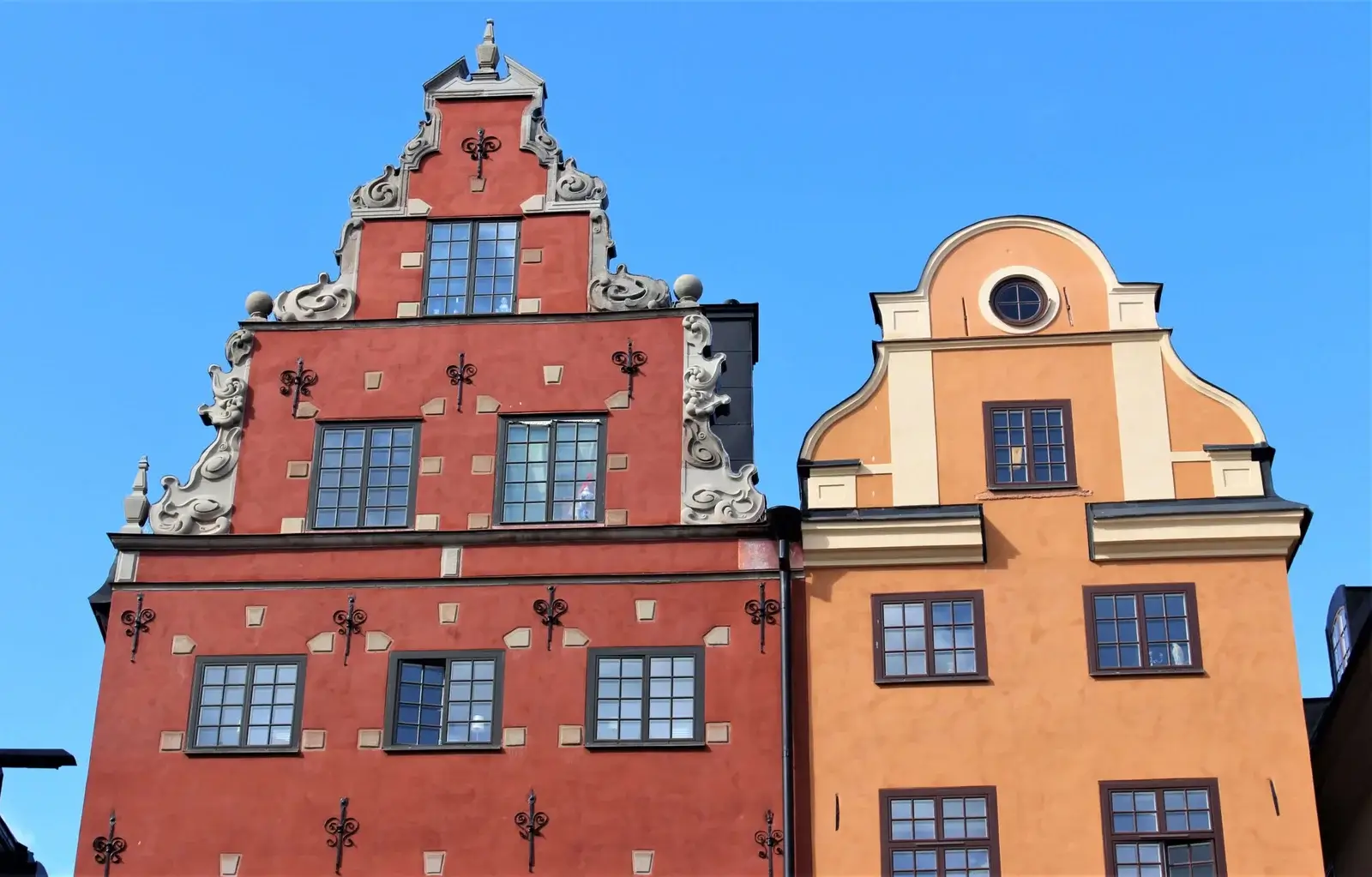
Finding an apartment in Stockholm can be one of the most challenging parts of moving to Sweden. You may have a permanent job, a good salary, and enough savings, but still struggle to secure a rental apartment because of long housing queues and strict landlord requirements.
The good news is that you do not necessarily need to wait years to find somewhere to live. However, if you are moving to Sweden for employment, understanding the Sweden work permit salary requirement can help you assess your eligibility and plan your move before accepting a job offer.
Sweden has two main types of rental contracts: first-hand (förstahandskontrakt) and second-hand (andrahandskontrakt). Both let you rent an apartment, but they vary greatly in security, rental prices, availability, and tenant rights.
For newcomers, international employees and students, second-hand rentals are often the quickest way to find accommodation. However, before transferring any money, understand the contract, confirm the landlord’s permission, and make sure the rent is reasonable.
This guide explains how to rent an apartment in Stockholm, where to find legitimate listings, what you should expect to pay, and how to avoid common rental problems. It also highlights tips on how to rent apartment stockholm effectively.
Table of Contents
- First-hand vs second-hand rental contracts
- How much does it cost to rent in Stockholm?
- Where to find apartments for rent in Stockholm
- How to rent an apartment as a newcomer
- Comprehending rental agreements and deposits
- Your rights as a second-hand tenant
- Common rental scams and mistakes
- Tips for finding cheaper apartments
- Final Recommendation: Which Rental Contract Should You Choose?
1. First-hand vs Second-hand Rental Contracts in Sweden
Before searching for apartments, understand Sweden’s two rental systems.
What is a first-hand rental contract (Förstahandskontrakt)?
A first-hand contract is a direct rental agreement between you and the property owner or housing company.
You rent the apartment directly from the landlord, rather than from another tenant.
Finding a suitable apartment in Stockholm can be quite competitive, particularly in popular neighborhoods where rental demand is high. If you are planning to rent an apartment in Stockholm, explore different rental platforms and compare available properties, prices and contract conditions before making a decision. It is also important to understand the terms of your rental agreement, including the rental period, deposit, notice period and whether subletting is permitted. Many newcomers start with a short-term rental while searching for a more permanent home. Understanding landlord expectations, preparing the required documents and responding quickly to suitable listings can make your apartment search easier.
Advantages of a first-hand contract:
- Greater long-term housing security.
- Usually no fixed end date.
- Regulated rent-setting arrangements.
- Generally stronger tenant protection.
- You deal directly with the property owner.
- You can usually stay as long as you comply with the rental agreement and applicable law.
Disadvantages:
- Long waiting times for popular apartments.
- Landlords may require proof of income and employment.
- You may need a Swedish personal identity number or other documentation.
- Competition is particularly high in central Stockholm.
The Stockholm Housing Agency (Bostadsförmedlingen) allocates many apartments according to housing queue time.
You can register and apply for apartments through its official website: Bostadsförmedlingen Stockholm.
The annual queue fee is SEK 200.
What is a second-hand rental contract (Andrahandskontrakt)?
A second-hand contract means you rent an apartment from someone who already has a rental contract or owns the apartment.
For example:
- An employee moves temporarily to another city for work.
- A family moves abroad for one year.
- An apartment owner wants to rent out their property while living elsewhere.
- A student rents an apartment from someone who is temporarily away.
You sign an agreement with the person renting out the property, not necessarily with the actual property owner.
Advantages:
- Often available much faster.
- More options for people who have recently moved to Sweden.
- Furnished apartments are widely advertised.
- Adjustable rental periods.
- Useful for employees relocating to Stockholm and international students.
Disadvantages:
- Contracts are often temporary.
- Rent may be higher than a comparable first-hand rental.
- You depend on the first landlord’s permission where required.
- You may need to move when the agreement expires.
- You have less long-term housing security.
Important: A second-hand rental must be authorized where the law requires it. A first-hand tenant generally needs permission from their landlord or the Rent Tribunal (Hyresnämnden). A condominium owner normally needs approval from the housing association or permission from Hyresnämnden.
First-hand vs second-hand: Comparison
| Feature | First-hand | Second-hand |
| Landlord | Property owner/housing company | Existing tenant or owner |
| Availability | Often difficult | Usually easier |
| Waiting queue | Common | Usually not required |
| Rental period | Often ongoing | Often temporary |
| Furnished options | Less common | More common |
| Housing security | Stronger | Depends on agreement and legal protections |
| Rent | Usually more predictable | Can be higher |
| Best for | Long-term residents | Newcomers and temporary residents |
Which should you choose?
If you are planning to settle in Stockholm permanently, a first-hand contract is generally preferable. However, if you have just arrived in Sweden for a new job or studies, a legitimate second-hand apartment can be a practical starting point while you build your housing queue.
2. How Much Does It Cost to Rent Apartment in Stockholm?
Rental prices depend on the apartment’s location, size, condition, age, furnishing, and contract type.
An apartment in central Stockholm will generally cost more than a similar-sized apartment in a suburb.
It is also important to distinguish between an established first-hand rental and a second-hand apartment advertised on the private rental market. They do not necessarily have the same rent-setting rules.
Understanding Stockholm rental prices
Statistics Sweden (SCB) publishes official rental statistics. Its 2026 national figures report an average monthly rent of SEK 9,528 for a three-room rental apartment. This includes heating and water but excludes household electricity and garage costs. When planning your cost of living in Sweden, remember that this is a national average, not a Stockholm-specific second-hand rental price.
For your own budget, use the following as an illustrative planning example rather than official Stockholm market averages:
| Apartment type | Illustrative monthly budget |
| Room in shared apartment | SEK 4,000–7,000 |
| Studio apartment | SEK 8,000–12,000 |
| One-bedroom apartment | SEK 10,000–15,000 |
| Two-bedroom apartment | SEK 13,000–19,000 |
| Three-bedroom apartment | SEK 16,000–25,000+ |
These are indicative budgeting ranges, not verified market statistics or guaranteed listing prices. Location, furnishing, and rental arrangements can make a substantial difference.
Example: Monthly rental budget
Suppose you are moving to Stockholm with your spouse and one child and want to rent a two-bedroom apartment.
| Expense | Monthly estimate |
| Apartment rent | SEK 16,000 |
| Electricity | SEK 300 |
| Internet | SEK 300 |
| Home insurance | SEK 150 |
| Total | SEK 16,750 |
Illustrative household budget. Actual costs depend on the apartment and what the rent includes.
Before agreeing to a rental price, ask whether the following are included:
- Heating (värme)
- Water (vatten)
- Household electricity (hushållsel)
- Internet (bredband)
- Parking (parkering)
- Furniture and appliances
A furnished apartment may cost more, but it can save you money when relocating from another country.
3. Where to Find Apartments for Rent in Stockholm
One of the biggest challenges is knowing which websites to use.
Some platforms specialize in first-hand rental contracts, while others mainly advertise second-hand apartments, rooms and furnished accommodation.
Here are useful places to start.
1. Bostadsförmedlingen Stockholm
Official housing queue: Visit Bostadsförmedlingen
This is one of the most important platforms for finding first-hand rental apartments in Stockholm.
You register, pay the annual queue fee, and apply for available apartments.
Anyone aged 18 or older with a Swedish personal identity number or coordination number can register. You do not have to live in Stockholm to join the queue. The annual fee is SEK 200.
How long does it take?
According to the agency’s 2025 statistics:
- Average waiting time for ordinary rental apartments: approximately 9 years.
- Average waiting time in central Stockholm: approximately 21 years.
- Some apartments are allocated much faster, particularly in less popular locations or newly built developments.
These are averages, not guaranteed waiting periods.
I recommend registering as soon as you become eligible, even if you rent somewhere else at first.
2. HomeQ
HomeQ connects apartment seekers with participating landlords.
Some landlords use queue points, while others use different selection methods. This means you shouldn’t assume every apartment requires several years of waiting.
Check the landlord’s individual requirements before applying.
3. Qasa
Qasa is useful for finding second-hand apartments, furnished flats, rooms and temporary accommodation.
It is particularly worth exploring if you are moving to Sweden for a new job and need accommodation before finding a permanent rental contract.
Read the platform’s current payment, verification, and rental protection terms before signing.
4. Samtrygg
Samtrygg focuses on second-hand rentals.
It can be useful for people who want a more structured rental process. Check the current service fees, insurance arrangements, and contract conditions before committing.
5. SSSB
SSSB provides student accommodation in Stockholm.
If you are studying at a university or eligible higher education institution, student housing can be a more affordable alternative to private rentals.
Other useful websites
| Platform | Main purpose |
| Blocket Bostad | Rental listings |
| Akademisk Kvart | Student accommodation |
| Bostad Direkt | Rental agency and listings |
| Visit Stockholm | Housing resources for newcomers |
4. How to Rent an Apartment in Stockholm as a Newcomer
If you have recently arrived in Sweden, you might not have a Swedish rental history, local references, or several months of salary statements.
This can make the process harder, but it doesn’t mean you cannot rent an apartment.
Follow these steps.
Step 1: Prepare your documents
Create a digital folder containing:
- Passport or valid identification.
- Swedish personal identity number (personnummer), if available.
- Employment contract.
- Recent salary slips, if available.
- Employer contact details.
- Bank statements or proof of savings, if requested.
- Previous landlord references, if available.
If you are a student, prepare your university admission letter and evidence of funding.
Some landlords accept foreign employment contracts or proof of income from abroad, but requirements differ.
Step 2: Decide where you want to live
Do not restrict your search to central Stockholm.
If you work in Kista, Solna, or another business district, consider apartments with convenient public transport connections rather than focusing only on the city center.
Stockholm’s metro, commuter trains and buses make it possible to live outside the central districts while commuting to work.
Step 3: Create a strong rental application
When contacting a landlord, introduce yourself briefly.
Explain:
- Your occupation and employer.
- Your monthly income.
- How many people will live in the apartment?
- Your intended move-in date.
- How long you want to rent.
- Whether you want furnished or unfurnished accommodation.
A clear application helps the landlord assess your suitability.
Step 4: Attend the apartment viewing
Whenever possible, inspect the apartment in person.
Check:
- Kitchen appliances and bathroom condition.
- Windows and ventilation.
- Heating and hot water.
- Furniture and storage.
- Signs of dampness or damage.
- Laundry facilities.
- Public transport connections.
Take photographs of existing damage before moving in.
Step 5: Verify the landlord and rental permission
This is one of the most important steps.
If you are renting a first-hand rental apartment from an existing tenant, ask for written evidence that the current landlord has approved the subletting or that Hyresnämnden has granted permission.
If you are renting a condominium, ask for evidence of the housing association’s approval or permission from the relevant tribunal.
Do not assume that someone has the legal right to rent out an apartment simply because they have keys.
Step 6: Sign the agreement and arrange payment
Make sure both parties sign a written agreement.
The agreement should specify:
- Monthly rent.
- Deposit.
- Rental start and end dates.
- Notice period.
- What utilities are included.
- Whether the apartment is furnished.
- Rules for maintenance and repairs.
- Inventory and condition of the apartment.
Only transfer money after you have verified the property, the landlord’s authority, and the signed agreement.
5. Understanding Rental Agreements, Deposits and Tenant Rights
Signing a rental agreement in Sweden is an important step. Don’t rely on verbal promises, WhatsApp messages, or informal arrangements.
What should a Swedish rental contract include?
A rental agreement (hyresavtal) should clearly identify the landlord, tenant, and apartment.
Make sure it includes:
| Contract detail | What to check |
| Property address | Full apartment address |
| Rental period | Start and end dates |
| Monthly rent | Exact SEK amount |
| Deposit | Amount and refund conditions |
| Notice period | How either party can terminate |
| Utilities | Electricity, heating, water and internet |
| Furniture | Inventory of included items |
| Maintenance | Who handles repairs and reporting |
| Permission | Evidence of authorised subletting, if required |
You can ask for a written agreement even when the other party initially offers a verbal arrangement.
How much deposit do you need?
A landlord may request a security deposit, particularly for a second-hand rental.
For example, if your monthly rent is SEK 14,000:
| Item | Amount |
| First month’s rent | SEK 14,000 |
| One-month deposit | SEK 14,000 |
| Initial payment | SEK 28,000 |
This is an illustrative example, not a statutory deposit requirement.
Before paying, establish:
- Whether the deposit is refundable.
- What circumstances allow deductions.
- When it will be returned.
- How the apartment’s condition will be documented.
- Whether a rental platform holds the deposit or you pay it directly to the landlord.
Get a written receipt for every payment.
How much rent can a second-hand landlord charge?
This matters because Swedish law distinguishes between different property types.
A. Subletting a rental apartment (hyresrätt)
If someone rents a first-hand apartment and sublets it to you, the current rent is normally the starting point for calculating reasonable rent.
For a furnished apartment, the landlord can generally add up to 15% to the base rent. Additional charges for electricity, broadband and parking must not exceed the actual costs.
Example:
| Calculation | Amount |
| Original monthly rent | SEK 12,000 |
| Maximum furniture supplement (15%) | SEK 1,800 |
| Total before additional actual costs | SEK 13,800 |
This example assumes the full 15% furniture supplement is justified.
If you believe the rent is unreasonable, you can contact Hyresnämnden. Depending on the circumstances and contract date, you may be able to seek a rent reduction and repayment of excessive rent.
For qualifying agreements entered into after 1 October 2019, repayment can cover up to two years before the application.
B. Subletting a privately owned apartment (bostadsrätt) or house
Different rules apply when renting from an individual who owns a condominium or house.
An important legal change took effect on 1 July 2026.
Sweden introduced the new Privatuthyrningslag (2026:772), replacing the previous law for qualifying private rentals. Under the new law, the Rent Tribunal can adjust rent if it is substantially higher than the rent generally charged for comparable private rentals.
The new law also changes which private landlords and rental arrangements are covered. It does not apply to someone subletting a rental apartment they themselves rent. Agreements entered into before 1 July 2026 continue under the previous law.
Therefore, do not automatically apply the 15% furniture rule to a privately owned apartment.
What happens if you want to terminate the contract?
Notice periods depend on the type of agreement.
For example, under the new private rental law, a tenant can terminate a fixed-term agreement early with three months’ notice, ending at the earliest applicable month-end. The rules differ from those applicable to ordinary rental apartments.
Always check the applicable legislation and contract before deciding your moving date.
6. Your Rights as a Second-hand Tenant
Many newcomers assume that renting second-hand means having no legal protection. That is not correct.
Your rights depend on who owns the apartment and what type of rental agreement you have.
Do you get permanent housing rights after two years?
This is a common question.
Under the ordinary rental rules, a second-hand tenant renting a hyresrätt may generally acquire a form of security of tenure (besittningsskydd) against the first-hand tenant after more than two consecutive years.
However, exceptions apply, and agreements can sometimes waive this protection with the necessary approval.
Importantly, this does not mean that you automatically become the first-hand tenant or take over the existing rental agreement.
What if the first landlord has not approved the subletting?
If someone rents out a rental apartment without the required permission, the first landlord may take legal action against the first-hand tenant.
This can create serious problems for the second-hand renter.
Always check permission before moving in.
Can you register your address in Sweden?
If you are moving to an apartment, you must provide your actual residential address to Skatteverket when the applicable population registration rules require it.
Having a second-hand contract does not automatically prevent you from registering your address.
For more information, visit Skatteverket.
Your rental agreement and actual living arrangements should be genuine and consistent with the information you provide to the authorities.
7. Common Rental Scams and Mistakes to Avoid
Stockholm’s housing shortage creates opportunities for fraudulent rental advertisements.
The Swedish Police specifically warns about apartment scams involving attractive addresses, copied property advertisements, and requests for several months of rent or deposits in advance.
Here are some warning signs.
Rental scam warning signs
- The landlord claims to be abroad and cannot arrange a viewing.
- They request money before showing the apartment.
- They refuse to provide identification.
- They cannot prove ownership or rental permission.
- The rental price seems unusually cheap for the location.
- They pressure you to transfer money immediately.
- They ask you to pay through anonymous payment services.
- They send fraudulent links asking for BankID or bank details.
How to verify a second-hand landlord
Before signing:
- Ask for the landlord’s full name and identification.
- If it is a rental apartment, contact the property owner using independently verified contact information.
- Confirm that the landlord has granted permission for a second-hand rental.
- If it is a condominium, request evidence of housing association approval or tribunal permission.
- Visit the property and confirm that the person has access to it.
- Sign a written agreement.
- Pay through a traceable payment method and keep the receipt.
The Swedish Police recommends checking the landlord’s identity, contacting the property owner directly, viewing the apartment, and avoiding advance payments until you’ve verified the property and signed an agreement.
If you encounter suspicious activity, you can report it to Polisen.
8. Tips for Finding Cheaper Apartments in Stockholm
If you are searching for cheap apartments in Stockholm, a flexible approach can make a difference.
1. Look outside central Stockholm
Consider suburbs with good commuter connections.
Try to balance rent and commuting costs rather than simply choosing the lowest advertised rent.
2. Search for smaller apartments
A studio apartment or one-bedroom flat may be more affordable than a larger family apartment.
If you are moving alone, consider renting a room initially.
3. Consider furnished apartments
Furnished rentals may cost more per month, but they can be convenient when you first arrive in Sweden.
You may avoid spending money on beds, wardrobes, kitchen equipment, and other furniture.
4. Register for housing queues early
Even if you are currently renting second-hand, join the official Stockholm housing queue if eligible.
You can build queue time while living elsewhere.
5. Consider newly constructed apartments
Some newly built apartments have shorter queue times than established apartments in popular areas.
However, new-build rental apartments can have relatively high monthly rents.
9. Final Recommendation: Which Rental Contract Should You Choose?
Choosing between a first-hand and second-hand rental depends on how long you intend to stay in Stockholm.
If you have recently moved to Sweden for work or studies, a second-hand apartment can help you establish yourself without waiting years for a first-hand contract.
However, if you are planning to settle permanently, register for the Stockholm housing queue as early as possible.
My recommendation is to follow a two-track strategy:
- Find a legitimate second-hand apartment that fits your budget and commuting needs.
- Register with Bostadsförmedlingen and other suitable housing providers.
- Build your housing queue time while working or studying in Stockholm.
- Monitor new-build apartments and less competitive neighborhoods.
- Move to a suitable first-hand rental when you receive an acceptable offer.
The most important thing is not to rush into an apartment simply because you need accommodation. Verify the landlord, understand the agreement, and make sure the rent is reasonable under the rules applicable to that property.
With proper planning, you can find a suitable apartment in Stockholm without making unneeded financial commitments.
Frequently Asked Questions About Renting in Stockholm
1. Can foreigners rent an apartment in Stockholm?
Yes. Foreigners can rent apartments in Sweden. Landlords may request identification, proof of employment, income documents, or other financial information. Requirements vary between landlords.
2. Can I rent an apartment in Stockholm without a personnummer?
Yes. Not having a Swedish personal identity number does not automatically prevent you from renting privately. However, some housing queues and landlords have specific identification requirements. Bostadsförmedlingen accepts a Swedish personal identity number or coordination number for registration.
3. How long does it take to get a first-hand apartment in Stockholm?
It varies considerably. The Stockholm Housing Agency reported an average waiting time of approximately nine years for ordinary rental apartments in 2025. Central Stockholm was considerably more competitive, with an average of around 21 years. Some apartments have much shorter waiting times.
4. Is it legal to rent an apartment second-hand in Sweden?
Yes. Second-hand rentals are legal if you obtain the required permission. A tenant subletting a rental apartment generally needs permission from the first landlord or Hyresnämnden. Condominium owners generally need permission from their association or Hyresnämnden.
5. Can I find furnished apartments in Stockholm?
Yes. Furnished apartments are commonly advertised through second-hand rental platforms such as Qasa and Samtrygg. Always check what furniture and appliances are included in the agreement.
6. Can I rent a house in Stockholm instead of an apartment?
Yes. Private individuals rent out houses, villas and parts of houses. These arrangements may fall under the private rental legislation, depending on the property and landlord. Check the applicable law, rental terms, and permissions before signing.
7. Can I get my deposit back when I move out?
Generally, a refundable security deposit should be returned according to the agreement if there are no valid deductions. Photograph the apartment before moving in and again when leaving. Keep evidence of the first condition and your deposit payment.
8. Is it possible to get a cheap student apartment in Stockholm?
Yes, if you meet the relevant student eligibility requirements. Register with SSSB and Bostadsförmedlingen and check Akademisk Kvart. Student housing may have different queue and eligibility rules from ordinary rental apartments.
9. What is the difference between hyresrätt and bostadsrätt?
A hyresrätt is a rental apartment where you pay rent to a landlord. A bostadsrätt is an apartment that you own through membership in a housing association, with certain possession and use rights. A bostadsrätt owner may rent out the apartment under applicable rules, subject to the required permission.
10. Which is better: first-hand or second-hand rental?
A first-hand rental is generally better for long-term housing security. A second-hand rental is often more practical for newcomers, international employees, and students who need accommodation quickly.





5 thoughts on “Renting an Apartment in Stockholm: First-hand vs Second-hand Contracts”
Comments are closed.